Annual lecture
Kottegoda Oration
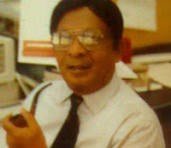
Vidya Jothi S. R. Kottegoda
Scientist, Physician, Academic, Polymath
Vidya Jothi Sri Rama (Sri Ramachandra) Kottegoda (November 3, 1919 – February 1995/early 1996) was an eminent Sri Lankan academic, physician, and polymath. Born in Tebuwana near Bandaragama, he was raised in an era defined by a native middle class that prized discipline, modesty, thrift, hard work, decency, service, and sacrifice—values that Kottegoda lived by and championed throughout his life. Physically diminutive in stature but possessing immense intellectual stature, charisma, and a sharp wit, he was highly regarded as a strict disciplinarian, a dedicated family man to his wife Damayanthi and their four children (Indira, Mevan, Sepali, and Ruwan), and a loyal friend. He was also an avid fan of P. G. Wodehouse.
He passed away unexpectedly but peacefully at home after returning from his work in Kalutara, leaving behind an extraordinarily rich legacy spanning medical research, national policy, environmental conservation, and the arts.
Education and Academic Achievements
He received his primary and secondary education at Royal College, Colombo. He subsequently excelled in his higher education, achieving:
- A first-class Bachelor of Science in Botany from the University of London.
- An MBBS from the Faculty of Medicine, University of Ceylon in 1947.
- A Doctor of Philosophy (D.Phil) from the University of Oxford in 1954.
- Post-doctoral training as a research fellow in pharmacology at Harvard Medical School in 1958.
In recognition of his distinguished career, he was made an Honorary Fellow of the Royal College of Surgeons (FRCS) in 1974 (also cited as FFARCS), and was conferred an Honorary Doctor of Science (DSc) by the University of Colombo in 1985. He was globally recognized by listings in the Who’s Who in Pharmacology (1981), Who’s Who in the Commonwealth (1983), Asia’s Who’s Who (1985), and the International Book of Honor (1985).
Medical Career, Drug Policy, and Indigenous Medicine
Kottegoda joined the academic staff of the Faculty of Medicine, Colombo in 1949, eventually becoming the Professor of Pharmacology in 1968. He served as the Dean of the Faculty of Medicine from 1970 to 1982 (some sources state until 1990).
Following his tenure in Sri Lanka, he served as a Visiting Professor (1981) and later Research Professor (1982–1986) in the Department of Obstetrics and Gynaecology at the National University of Singapore, where he published over sixty research papers primarily in prostaglandin research. In his later years, he served as the National Coordinator of Health Systems Research for the Ministry of Health at NIHS Kalutara.
His contributions to public health and pharmacy were groundbreaking:
- National Formulary Committee: Alongside Professors Senaka Bibile and NDW Lionel, Kottegoda pioneered the National Formulary Committee under the Sirimavo Bandaranaike government in 1970. They introduced generic terminology for drug importation, prescription, and dispensing to ensure affordable, quality medicines for the public—a model later adopted by the WHO and other developing nations.
- WHO Expert Committee: He served as a member of the WHO Expert Committee on Drug Evaluation until 1989.
- Synthesis of Medicine: He worked tirelessly to synthesize the teaching of Western and Ayurvedic medicine, specifically in anatomy, physiology, and pharmacology. He served on the Board of Governors of the School of Ayurveda, the Ayurvedic Research Council, and the Ministry of Health’s synthesis committee.
Authority on Ethics in Science
Professor Kottegoda is widely remembered for placing Ethics at the front and center of public and scientific life. To ensure professional and clinical integrity, he established the first Research Ethics Review Committee in Sri Lanka at the Faculty of Medicine, Colombo.
His ethical leadership expanded nationally:
- As General President of the SLAAS (1979), his campaign directly resulted in the establishment of the SLAAS Ethics Committee.
- In 1991, he chaired the committee of the Natural Resources, Energy, and Science Authority (NARESA/NSF) to draft the country’s first comprehensive code for research and biomedical ethics.
- In 1994, he spearheaded efforts to establish a National Ethics Review Committee.
He famously maintained absolute professional distance from the pharmaceutical industry as an ethical role model, ensuring that even the wall calendars in his pharmacology department were from independent hardware companies rather than drug manufacturers.
Polymathic Pursuits and Creative Legacy
Kottegoda was a true polymath with a diverse array of passions:
- Photography: He was an internationally acclaimed amateur photographer whose monochrome and available-light rangefinder work was exhibited in over 14 countries. He won top prizes worldwide, including the South East Asia Photographic competition (1976), the International Year of the Child in Sri Lanka (1979), the Minolta competition (1980), and the Sri Lanka Tourist Board competition (1987). Two of his photographs featured on Sri Lankan postage stamps.
- Flowers of Sri Lanka: His deep knowledge of botany and twenty-year photographic documentation of Sri Lanka’s flora culminated in his classic masterwork, “Flowers of Sri Lanka”, published by the Royal Asiatic Society of Sri Lanka in 1994. He was known to fearlessly exit vehicles in wildlife sanctuaries to photograph rare flowers in situ.
- Archaeology: He had a scholarly interest in archaeology and published several accounts on ancient Sri Lankan sites like Ritigala, Buduruwagala, Situlpauva, and Tiriyaya, guided by his close friend, Archaeology Commissioner Dr. Raja De Silva.
- Calligraphy and Music: He possessed beautiful handwriting and was a passionate fan of opera, elegantly hand-writing calligraphy labels for classic recordings like La Traviata and Carmen.
- Cricket Fanatic: He was a legendary cricket enthusiast, particularly of the annual Royal-Thomian match, famously finding ethical ways to keep track of cricket scores during lectures and rigorous workdays.
Introduction to the S. R. Kottegoda Memorial Oration
The S. R. Kottegoda Memorial Oration is a prestigious annual lecture established in 1996 by the family, friends, and the Ethics Committee of the Sri Lanka Association for the Advancement of Science (SLAAS) to perpetuate the memory of one of its most illustrious General Presidents. Held at the SLAAS Auditorium, the oration celebrates the life and values of a revered educationist, eminent scientist, and pioneering authority on scientific and medical ethics.
Through the years, the oration has invited eminent academics and professionals to address ethical dimensions across diverse specialties. In keeping with Professor Kottegoda’s multifaceted spirit and “Midas touch” of turning knowledge into societal value, the orations have historically moved beyond clinical medicine to tackle broad, pressing ethical issues affecting modern society. These have included ethical tenets of public health policies, ethical issues in food advertising, the impact of conflicting knowledge streams on society, ethical challenges in an ageing society, the ethics of media presentation and truth, the ethical aspects of global climate change, ethics in sports medicine, ethical considerations in education and pupil assessment, and ethics in scientific research for a knowledge-based society. The lectures stand as a continuing testament to Kottegoda’s lifelong mission of creating a professional scientific community that deeply respects ethical conduct and the preservation of human dignity.
Delivered annually since 1996
List of orators
Chronological record of the Kottegoda Oration, from its most recent delivery to its inaugural year.
- Professor V. Basnayake — Science ethics in Huxley’s Island
- Mrs Anoja Fernando — Ethical health care from a Buddhist perspective
- Professor C. H. Fernando — Ethics in science should be untrammeled
- Proceedings published as “Speeches by three friends of Professor S. R. Kottegoda” (ed. Dr R. L. Jayakody)
- Introductory remarks — V. Basnayake
- Plantation industry — W. W. D. Modder
- Coconuts, people, science and politics — C. H. Fernando
- Ethics: Natural and metaphysical — V. Joseph
- Industrial research and development — R. O. B. Wijesekera
- Teaching in economics — A. D. V. De S. Indraratna